

01: Hello
, again
11/09/2025
I’ve been trying to find a way to catalog what I learn and read. With my studies, I'm often flooded with class readings, psychology articles, and helpful insights. I realized that writing here could be a way to manage it all, especially since I’ve been neglecting writing and want to get back into it. I hope that one or two of these reflections may resonate with you. Some entries will be summaries, quotes, or thoughts on the work, while others may be fragments—some weeks, I’m buried in readings, and others, I can barely get through a few pages. I’ll do my best to keep up.
Writing seems to help me retain what I’ve learned. However, I often feel guilty and worried I won’t remember much due to my exhausting hours, endless reading, and difficulty finding time to relax or let things sink in.
Lately, I’ve been reflecting on my undergraduate degree in biological sciences. I did well, mostly because I had a solid study system based on memorization and meticulous notes. But now, in graduate school with its seminars, pass/fail courses, and focus on theory, that style hasn’t fully translated. I could argue that I hardly learned some of the material similarly. Still, writing and re-writing my notes was the one practice that genuinely helped me grasp things (a discovery I made only in my last undergrad year).
Because of my classes, meetings, and readings, I constantly come across ideas I want to explore but can’t focus on immediately. So, my goal is to capture these—paragraphs on things I’ve learned, meaningful conversations, key themes, ideas, or even questions I want to explore further.
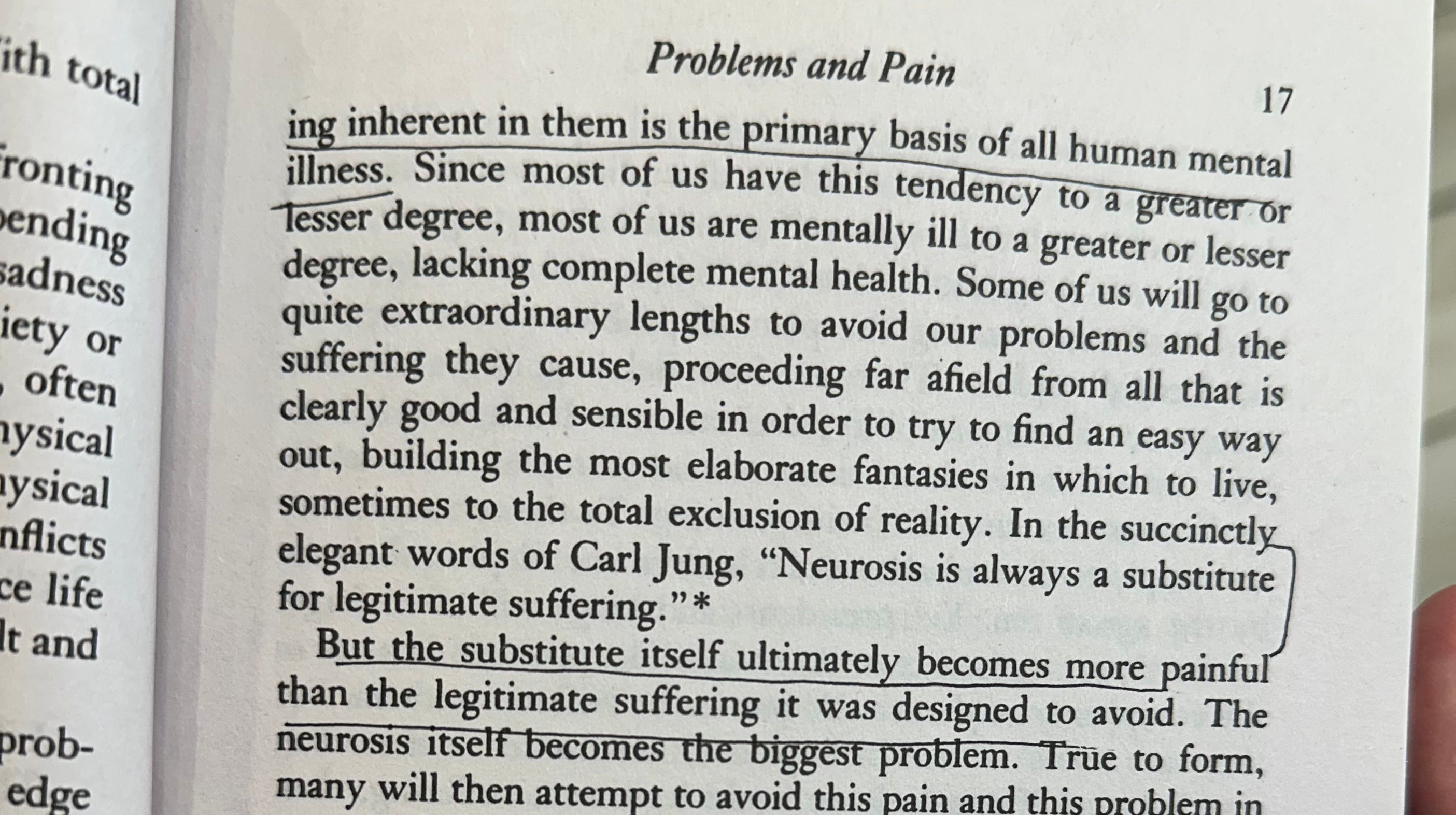
As I think about it, I find more reasons to commit to this mini-project. I want to improve my writing; becoming a clinician involves more communication, admin work, and documentation than I’d considered. And practice is vital. Even just a fraction of “perfect” would be helpful — I want my writing to be succinct and impactful. For some reason, I also feel that revisiting and building on these thoughts will help avoid that feeling of “brain rot” that scrolling often gives me. So, if my neuroticism doesn’t scare you off, I’d love for you to bear with me.
I’ll add some fun along the way: recent obsessions, photos, random things I’d like to share—a diary of sorts. Starting this in the final month of my semester feels like a worthwhile experiment.
11/06/2024
Termination of Psychotherapy: Some Salient Issues
(Levinson, 1977)
Ending therapy is critical for long-term outcomes, as past experiences, emotional investment, and current circumstances shape patients' reactions. Therapists must manage personal emotions, avoid extending treatment for personal reasons, and guide patients through separation while addressing any resurfacing or defensive behaviors to ensure a healthy transition and continued growth.
I guess it’s helpful that many of these readings are about something currently happening in my life—here, termination, or the conclusion of the client-therapist relationship when treatment goals are met, or therapy ends. So far this semester, I have had eight patients, and I will begin terminating with some this upcoming week. The violence of the word termination is so funny to me and feels so inappropriate to describe the ending of a therapeutic relationship.
11/05/2024
Treating Patients with Symptoms—and Symptoms with Patience
(Bromberg, 2001)
Human personality is composed of multiple shifting self-states, which create an illusion of a unified self and examine how dissociation helps maintain self-continuity in response to psychological trauma (paper focuses on eating disorders).
“We do not treat patients to cure them of something that was done to them in the past; rather, we are trying to cure them of what they still do to themselves (and to others) in order to cope with what was done to them in the past.”
My teacher mentioned him (Bromberg) this week, and I was immediately interested. One of his articles was assigned reading for another course and provided an excellent introduction to Bromberg’s idea that everyone ‘dissociates’ as healthy selves are composed of multiple shifting self-states.

11/04/2024
Getting Cold Feet, Defining “Safe-Enough” Borders: Dissociation, Multiplicity, and Integration in the Analyst’s Experience
(Davies, 1999)
Explores the fate of the analyst’s multiple self/other organizations during heightened countertransference.
“Autonomous sub-organizations of internalized self and object representations which move in and out of conscious prominence depending upon the evocative potential of the current interpersonal moment.”
“The goal of such an analytic agenda is to invite into interpersonal enactment those dissociated aspects of self/other experience that have been rendered unconscious by dint of the individual's striving toward a state of equilibrium and integration.”
“The individual's experience of self at any given instance, reconfigures itself in accord with the present interpersonal moment.”
The Family Problem, Now: The old family is dead
(O’Brien, 2022)
“‘The crisis consists precisely in the fact that the old is dying and the new cannot be born,' Gramsci wrote in 1930. ‘In this interregnum a great variety of morbid symptoms appear’”.
Weekly Favorites
Attempting to disengage with unnecessary items in my handbag
Pretending I am holding it all together
Seven Minutes by TOPS
Finding the balance between documenting the ‘necessary’ and what is extraneous
Being able to use my time to help others
Wearing the same outfits

I also think "termination" is such an intense term for ending such a sacred relationship!